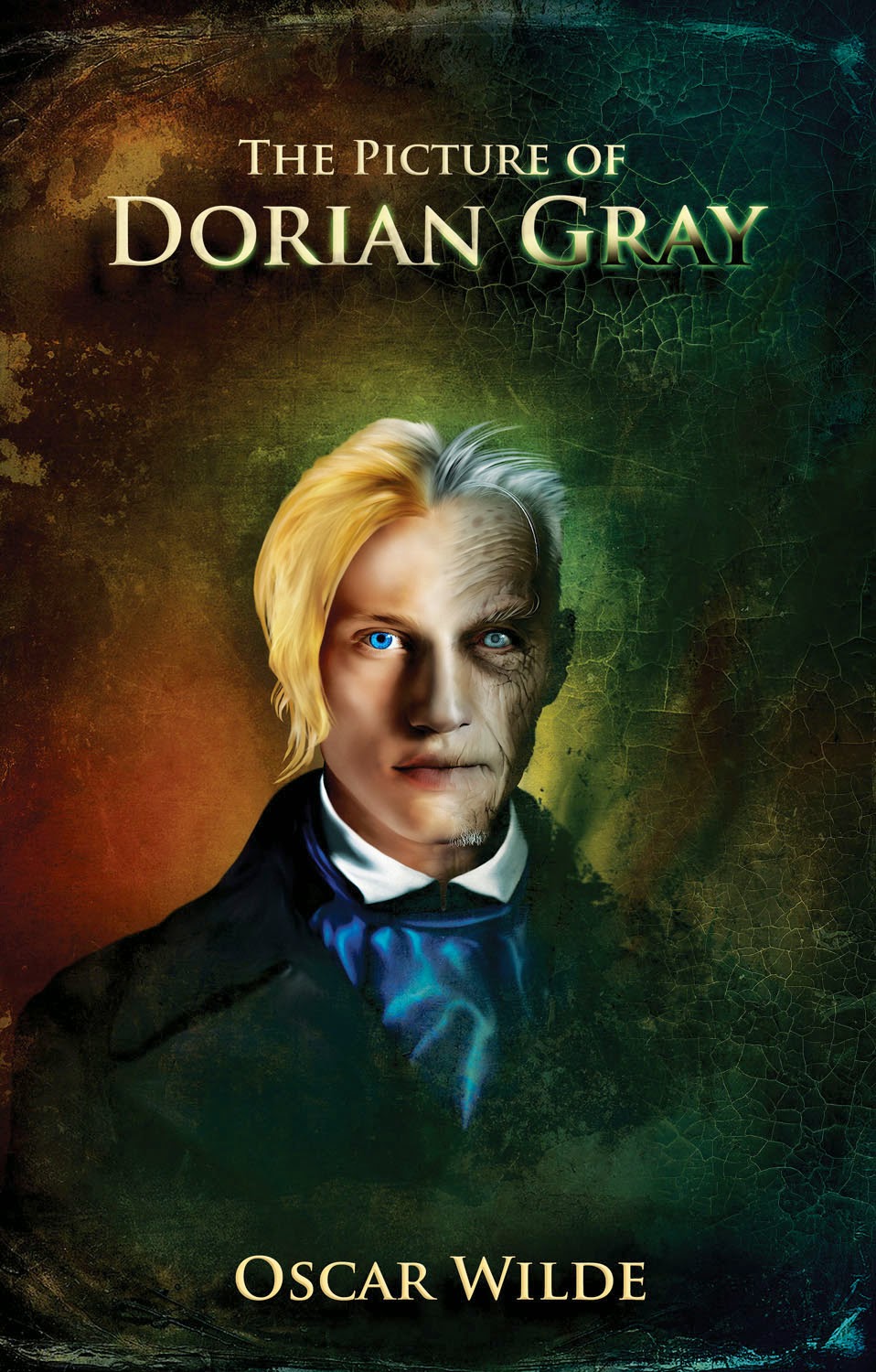
I decided to read Dorian Gray because a dear friend of mine who was coming to visit had just finished reading it and I wanted to have a good old fashioned face-to-face book discussion. I love my book blog, but nothing beats discussing a book with someone in person. I had seen the modern Dorian Gray book adaptation and like pretty much everyone in Western culture I had a vague idea of what the novel was about.
I am starting to get grumpy in my reading, but Dorian Gray is FINALLY a novel that deserved its reputation in history. It has something to say, it is a thoroughly engaging story and it was progressive for its time. And I am discovering most importantly...I enjoyed reading it!
My friend and I had a very good discussion about the book. She had bought a beautifully illustrated copy of the original version of the novel which is quite different from the common version that most people read. Oscar Wilde received quite a a bit of flack for the original version which contained much more overt reference to the attraction and sexual obsession of Basil, the artist, to Dorian Gray. In the subsequent additions he toned it down. On the flip side my friend's version did not have the foreword which my novel had where Wilde insists that art should be art for art's sake. It emphasizes quite adamantly that if you look at a symbolic meaning in art, you do so at your own peril.
I am quite confused as to why the novel received flack for its racy content, because although the topics covered in the novel would be quite scandalous for their time the predominant message is that the wonton things that Dorian Gray engaged in had an impact on his life. His vanity and carousing appeared on his portrait even though it did not manifest on his person. It is an extremely moral novel which shows that every action has a reaction to it.
When I was watching the film adaptation of the novel I was extremely saddened by the artist Basil who was obsessed with Dorian. His friend Lord Henry essential steals his prized possession out from under him and I was upset by the fact that Lord Henry was aware what Dorian meant to him. The novel version makes it clear, however, that Basil's extreme and obsessive love with Dorian lead to his own downfall and was something that he regretted in the end.
This novel is extremely engaging. The story is interesting and fascinating and the plot movies quickly without bogging down. I enjoyed the whole experience of reading this book which is something I can't say for most of the books I have read lately. I am actually surprised that this book did not make the novel 100. I think when I finish this challenge and have a few more classics under my belt I will challenge myself to make a list of some of my favourite novels of all time.
I will end this blog with part of a quote that really stood out for me:
"The terror of society, which is the basis of morals, the terror of God, which is the secret of religion..."
Friday, August 22, 2014
Saturday, August 16, 2014
Book 56- Things Fall Apart (90th Book)
Things Fall Apart by Chinua Achebe was the 56th book I have read on the list of 100. It was a good book with a great story, but it will not become my favourite book by any stretch of the imagination. I frequently regret starting this list at the top, because the books are definitely getting mediocre as I progress down the list!
This book reminded me a lot of The Poisonwood Bible. I am always completely disheartened when I hear stories of Christians who go to foreign countries with an eye to convert the masses. It is so prideful and always has a disastrous outcome.
The first half of this book follows the story of Okonkwo who sets out to prove that he can make something of himself despite his father's lazy and incompetent ways. He gains fame as a great wrestler when he is just a young child. As he grows up he decided that he must show no weakness and always be strong. As with anyone who causes the pendulum to swing too far to the other side he discovers that there are flaws on either end of the spectrum. On a side note I watched a great Film Noir movie called Detective Story at a cute indie theatre in town this week that told the same story. In this case, the main police detective was trying to make up for his father's abusiveness by becoming a servant of justice. His black and white views on good and evil ended up being his downfall. I highly recommend the movie if you can find it because I was blown away by the fantastic story and amazingly portrayed characters. It was filmed in the 50s though so you will have to put up with a few dated elements and a bit of chauvinism.
The second half of the novel follows the village's downfall after Christian missionaries move into the community and attempt to convert the masses. At first, it is only society's outcasts that find meaning in story of the God of love. When a few people of high society are converted and violence ensues the novels title makes an appearance and you can see that things are about to fall apart. The novel does not end on a happy note, and you are left to wonder what will become of the village that has started to unravel.
I am extremely happy that Daniel Burt chose to add novels from more than one ethnicity and community to his list. I have loved expanding my horizons as I read literature from around the world. I struggled to place myself in the shoes of Okonkwo as he used violence against his wives and children and killed the boy he had adopted as a son. That being said it is great to look at the world with different lenses, particularly as a person of faith. Although the tribal belief system seems foreign and outdated it is great to try on different perspectives and hopefully analyze your own beliefs. I have never been one who is afraid of the questions and have always been open to dialogue. I am happy to add new literature and cultural experiences to my repertoire.
My last comment on the novel is that I absolutely adored the title. I did a study on the poem that it comes from when I was in high school and was pleasantly surprised when I discovered that the poem was a picture of William B. Yeats belief that the world was based on a 2000 year cycle. The words resonated with me and even though I don't believe his theories I absolutely adored his imagery and use of language. It is great that we can communicate with each other across the continents and across the centuries through the use of words. I felt that this quote from the novel reminded me a lot of the poem:
This book reminded me a lot of The Poisonwood Bible. I am always completely disheartened when I hear stories of Christians who go to foreign countries with an eye to convert the masses. It is so prideful and always has a disastrous outcome.
The first half of this book follows the story of Okonkwo who sets out to prove that he can make something of himself despite his father's lazy and incompetent ways. He gains fame as a great wrestler when he is just a young child. As he grows up he decided that he must show no weakness and always be strong. As with anyone who causes the pendulum to swing too far to the other side he discovers that there are flaws on either end of the spectrum. On a side note I watched a great Film Noir movie called Detective Story at a cute indie theatre in town this week that told the same story. In this case, the main police detective was trying to make up for his father's abusiveness by becoming a servant of justice. His black and white views on good and evil ended up being his downfall. I highly recommend the movie if you can find it because I was blown away by the fantastic story and amazingly portrayed characters. It was filmed in the 50s though so you will have to put up with a few dated elements and a bit of chauvinism.
The second half of the novel follows the village's downfall after Christian missionaries move into the community and attempt to convert the masses. At first, it is only society's outcasts that find meaning in story of the God of love. When a few people of high society are converted and violence ensues the novels title makes an appearance and you can see that things are about to fall apart. The novel does not end on a happy note, and you are left to wonder what will become of the village that has started to unravel.
I am extremely happy that Daniel Burt chose to add novels from more than one ethnicity and community to his list. I have loved expanding my horizons as I read literature from around the world. I struggled to place myself in the shoes of Okonkwo as he used violence against his wives and children and killed the boy he had adopted as a son. That being said it is great to look at the world with different lenses, particularly as a person of faith. Although the tribal belief system seems foreign and outdated it is great to try on different perspectives and hopefully analyze your own beliefs. I have never been one who is afraid of the questions and have always been open to dialogue. I am happy to add new literature and cultural experiences to my repertoire.
My last comment on the novel is that I absolutely adored the title. I did a study on the poem that it comes from when I was in high school and was pleasantly surprised when I discovered that the poem was a picture of William B. Yeats belief that the world was based on a 2000 year cycle. The words resonated with me and even though I don't believe his theories I absolutely adored his imagery and use of language. It is great that we can communicate with each other across the continents and across the centuries through the use of words. I felt that this quote from the novel reminded me a lot of the poem:
"For whom is it well, for whom is it well? There is no one for whom it is well"My last and favourite quote from the novel is this: "There is no story that is not true". This is my favourite part of literature. I love that whether it is told in metaphor or represents a theory that you don't subscribe to there are still glimmers of truth that resonate within you. Stories are a way of explaining the human experience and I love that we have been gifted with this method of making sense of the world around us.
Saturday, August 2, 2014
The Castle of Crossed Destinies (89th Book)
I picked up The Castle of Crossed Destinies by Italo Calvino at my lovely local library. I have loved having a big city library so close to my house. It means that whenever I want something it is almost always on hand. This book has intrigued me since I first picked up the list of 1001 books to Read Before You Die. The novel is basically told through a series of Tarot cards which are used by a room full of mute travellers to tell the story of how they came to be at both a castle and a tavern. I loved the concept.
The thing I found with this novel is that I liked the idea better than the execution. The stories were moderately interesting and the majority of them where stories we had heard before. I found the interweaving of the tales with Tarot cards to be a bit challenging. My reading was broken up as I looked at the pictures and compared them to the stories. I don't think I was ever really lost in the story at any given point.
I love the theme which is that all tales are based on similar archetypes and that all stories intersect with others. The story made me get on a very real level that we share a common destiny with our fellow travellers in this life. I particularly loved the Tale of the Waverer which, I believe, is the first that Italo Calvino created when he wrote the novel. The tale follows a man who can not make a decision. He is asked to choose between his two lady loves, which he is unable to do. He then journeys through a forest only to find his way barred from the City of All. "Are you admitted even into the City of All only through a choice and a rejection, accepting one side and rejecting the rest?" I love that we get to choose our path as human beings. We are in control of our destiny which is both a blessing and a curse. Somewhere in my teen years I began to see that choice was freedom and instead of being bound by the fear of making a wrong choice, I embraced the chaos of deciding. Life has never been so much fun!
This book is a very short and fun read. I look forward to picking up more of Calvino's works as several of them make up the 1001 Books to Read Before You Die.
The thing I found with this novel is that I liked the idea better than the execution. The stories were moderately interesting and the majority of them where stories we had heard before. I found the interweaving of the tales with Tarot cards to be a bit challenging. My reading was broken up as I looked at the pictures and compared them to the stories. I don't think I was ever really lost in the story at any given point.
I love the theme which is that all tales are based on similar archetypes and that all stories intersect with others. The story made me get on a very real level that we share a common destiny with our fellow travellers in this life. I particularly loved the Tale of the Waverer which, I believe, is the first that Italo Calvino created when he wrote the novel. The tale follows a man who can not make a decision. He is asked to choose between his two lady loves, which he is unable to do. He then journeys through a forest only to find his way barred from the City of All. "Are you admitted even into the City of All only through a choice and a rejection, accepting one side and rejecting the rest?" I love that we get to choose our path as human beings. We are in control of our destiny which is both a blessing and a curse. Somewhere in my teen years I began to see that choice was freedom and instead of being bound by the fear of making a wrong choice, I embraced the chaos of deciding. Life has never been so much fun!
This book is a very short and fun read. I look forward to picking up more of Calvino's works as several of them make up the 1001 Books to Read Before You Die.
The Mill on the Floss (88th Book)
I read Mill on the Floss in two chunks: one which had me in stitches, and highly amused by the antics of this interesting family, and the other, after a long break, with quiet dedication and interest to know what would become of the characters. Somewhere in the middle I got lost and had to put the book down.
I don't know what to make of this book. I think my main struggle is that I was really looking forward to it after Middlemarch which just might be the favourite book I have discovered from the Novel 100. This book was nothing at all like Middlemarch, which is not to say it is bad. It has all the marks of great literature, I just don't love it. When ever I get stuck on a novel, only then to finish it with relative ease, I am unsure how to rank the book. It sat on my bedside table for months while I stared at it with disdain. I think I got lost in the middle because the novel was just so bleak. Maybe it was my mood or maybe the characters were lost on me, but the middle of the novel felt like a slog for me.
When I picked the book back up again, after my several month break the pages flew by fairly quickly. I was interested to know what would become of the characters again. Strangely enough I didn't like any of them. The father was a bumbling idiot, quick to anger which led to his family's demise. Maggie was passionate and flighty and tried to stuff all her feelings down in religious piety and family loyalty. Tom was arrogant and blind to all, but his own honour and redeeming that of his family. The mother was passive and let life happen to her. If there was ever a novel that depicts hubris to a tee, this is it. The fatal flaws in both Maggie and Tom lead to their down fall.
I absolutely HATED the end of the novel, don't even get me started on it. The ending made me angry, but it did make me feel and quite passionately at that. I think that is a sign of great literature. The copy I read had a summary at the end about what the book was about and a bit of George Eliot's history. There was a quote in it that I thought summarized why I can hate the characters, but still not hate the book. George Eliot wanted readers to "be better able to imagine and feel the pains and the joys of those who differ from themselves in everything but the broad fact of being struggling, erring human creatures"
The one thing I will say for this novel is that it has a completely differ theme and feel to Middlemarch. I have often found that writers have one pet theme and one main idea and they create novels that are simply variations on the same theme. Unlike Middlemarch, this novel sets out to show the idyllic time that childhood is for a lot of people. It is also a bildungsroman as Maggie is a character that goes through a lot of development. Here is a quote that summarizes the tone and feel of the novel well:
"There is no sense of ease like the ease we felt in those scenes where we were born, where objects become dear to us before we had known the labour of choice."
This novel is basically about growing up and moving away from the easy times of childhood. It is also about the ties that hold and bind us in family. Maggie loved her brother Tom and it lead to her demise. She was also someone who chose to sacrifice herself for others happiness quite a bit. Normally I would say that this is an admirable characteristic, but in Maggie's case it is an unnecessary self denial.
That is a beautiful quote which I wholeheartedly agreed with. Maggie was an honourable individual, but the choices she made while listening to her inner voice were awful.
I have written my review and I still don't know what to make of this novel. It certainly won't make it to my top ten, but it definitely is not the worst novel I have ever read. I am curious about George Eliot's other novels now. If they are each completely different from each other I would love to see what else she tackles. I am really glad that I didn't completely give up on it when I ran into the snag in the middle.
I don't know what to make of this book. I think my main struggle is that I was really looking forward to it after Middlemarch which just might be the favourite book I have discovered from the Novel 100. This book was nothing at all like Middlemarch, which is not to say it is bad. It has all the marks of great literature, I just don't love it. When ever I get stuck on a novel, only then to finish it with relative ease, I am unsure how to rank the book. It sat on my bedside table for months while I stared at it with disdain. I think I got lost in the middle because the novel was just so bleak. Maybe it was my mood or maybe the characters were lost on me, but the middle of the novel felt like a slog for me.
When I picked the book back up again, after my several month break the pages flew by fairly quickly. I was interested to know what would become of the characters again. Strangely enough I didn't like any of them. The father was a bumbling idiot, quick to anger which led to his family's demise. Maggie was passionate and flighty and tried to stuff all her feelings down in religious piety and family loyalty. Tom was arrogant and blind to all, but his own honour and redeeming that of his family. The mother was passive and let life happen to her. If there was ever a novel that depicts hubris to a tee, this is it. The fatal flaws in both Maggie and Tom lead to their down fall.
I absolutely HATED the end of the novel, don't even get me started on it. The ending made me angry, but it did make me feel and quite passionately at that. I think that is a sign of great literature. The copy I read had a summary at the end about what the book was about and a bit of George Eliot's history. There was a quote in it that I thought summarized why I can hate the characters, but still not hate the book. George Eliot wanted readers to "be better able to imagine and feel the pains and the joys of those who differ from themselves in everything but the broad fact of being struggling, erring human creatures"
The one thing I will say for this novel is that it has a completely differ theme and feel to Middlemarch. I have often found that writers have one pet theme and one main idea and they create novels that are simply variations on the same theme. Unlike Middlemarch, this novel sets out to show the idyllic time that childhood is for a lot of people. It is also a bildungsroman as Maggie is a character that goes through a lot of development. Here is a quote that summarizes the tone and feel of the novel well:
"There is no sense of ease like the ease we felt in those scenes where we were born, where objects become dear to us before we had known the labour of choice."
This novel is basically about growing up and moving away from the easy times of childhood. It is also about the ties that hold and bind us in family. Maggie loved her brother Tom and it lead to her demise. She was also someone who chose to sacrifice herself for others happiness quite a bit. Normally I would say that this is an admirable characteristic, but in Maggie's case it is an unnecessary self denial.
"We can't choose happiness either for ourselves of for another; we can't tell where that will lie. We can only choose whether we will indulge ourselves in the present moment or whether we will renounce that for the sake of obeying the divine voice within us, the sake of being true to all the motives that sanctify our lives."
That is a beautiful quote which I wholeheartedly agreed with. Maggie was an honourable individual, but the choices she made while listening to her inner voice were awful.
I have written my review and I still don't know what to make of this novel. It certainly won't make it to my top ten, but it definitely is not the worst novel I have ever read. I am curious about George Eliot's other novels now. If they are each completely different from each other I would love to see what else she tackles. I am really glad that I didn't completely give up on it when I ran into the snag in the middle.
Saturday, July 19, 2014
Book 55- Petersburg
I thought I liked Russian literature, but with the last few novels I have read I have been proved wrong. It turns out I like a very specific era of Russian novels, or perhaps just two Russian authors: Dostoyevsky and Tolstoy. With the Russian novels on the Novel 100 list I have been highly disappointed. One of my friends sent me a highly amusing summary of Russian novels that is worth a read. I recognized quite a few novels on the list! It is interesting to point out that Petersburg by Andrei Bely is one of about 10 novels that does not also appear in the 1001 Books list that I am also reading.
One good thing about the list is that I am starting to draw parallels between the novels I have read and I found a few with this novel. The strongest correlation I found in this novel was to Fathers and Sons by Turgenev. The two main characters Abluekhov and Nikolai are at war with one another just like the father and son duo from Turgenev's novel. I didn't like that novel either. There was a Russian symbolist movement? Who knew. This novel also has a few comparisons to Ulysses and James Joyce. In my mind, there is no comparison between the two, although this novel precedes Ulysses by nearly a decade. Having recently read Grapes of Wrath I also found elements of the weird poetic breakouts from that novel in this one. I didn't like those elements in Grapes of Wrath either. Generally, I like symbolism, and I imagine I am one of the few people who truly like Joyce. The movement loses something when you try to place it in the Russian context. All my favourite elements of Russian novels (the focus on the poor, the focus on the human condition, and a connection to the environment around you) get lost in this novel. The final novel I was reminded of, mostly because of the use of a bomb in the novel, was The Secret Agent by Joseph Conrad.
I spent a large portion of my time reading this novel completely confused. It jumped around in time and and from several points of view. It retold incidents from several angles. I would eventually figure out what was happening, but not before floundering around helplessly. The one thing that this novel had going for it is that it had elements of a nightmarish dream world. Reality and dream were intermingled in it and the feeling I was left with was one of impending doom. None of the characters in the novel are having a good time in life and we are viewing the world through their eyes. This leaves everything with a distorted feel to it. I don't think there is a single neutral narrator in the novel. They are all unreliable.
I am grateful to leave this novel behind and will probably not think of it again. I am still left mulling over Grapes of Wrath, however. Although I didn't love the entire novel it had a lot of really great things to say and I am constantly reminded of it when I think of the world today and the disconnect between the rich and the poor.
One good thing about the list is that I am starting to draw parallels between the novels I have read and I found a few with this novel. The strongest correlation I found in this novel was to Fathers and Sons by Turgenev. The two main characters Abluekhov and Nikolai are at war with one another just like the father and son duo from Turgenev's novel. I didn't like that novel either. There was a Russian symbolist movement? Who knew. This novel also has a few comparisons to Ulysses and James Joyce. In my mind, there is no comparison between the two, although this novel precedes Ulysses by nearly a decade. Having recently read Grapes of Wrath I also found elements of the weird poetic breakouts from that novel in this one. I didn't like those elements in Grapes of Wrath either. Generally, I like symbolism, and I imagine I am one of the few people who truly like Joyce. The movement loses something when you try to place it in the Russian context. All my favourite elements of Russian novels (the focus on the poor, the focus on the human condition, and a connection to the environment around you) get lost in this novel. The final novel I was reminded of, mostly because of the use of a bomb in the novel, was The Secret Agent by Joseph Conrad.
I spent a large portion of my time reading this novel completely confused. It jumped around in time and and from several points of view. It retold incidents from several angles. I would eventually figure out what was happening, but not before floundering around helplessly. The one thing that this novel had going for it is that it had elements of a nightmarish dream world. Reality and dream were intermingled in it and the feeling I was left with was one of impending doom. None of the characters in the novel are having a good time in life and we are viewing the world through their eyes. This leaves everything with a distorted feel to it. I don't think there is a single neutral narrator in the novel. They are all unreliable.
I am grateful to leave this novel behind and will probably not think of it again. I am still left mulling over Grapes of Wrath, however. Although I didn't love the entire novel it had a lot of really great things to say and I am constantly reminded of it when I think of the world today and the disconnect between the rich and the poor.
Friday, July 4, 2014
Book 54- Grapes of Wrath (87th Book)
I was so excited to read book 54- The Grapes of Wrath. John Steinbeck was one of my favourite authors as a teen. I devoured several of his books including East of Eden, Winter of our Discontent and several of his short stories before crashing and burning on his novels. I made the early discovery, which I made several times in my teens...if you read too much of the same author you are struck with the fact that they really only have one main theme and all the books start to blur together.
This is one of Steinbeck's best sellers but it is by no means my favourite. The first novel I ever read of his was East of Eden and it will always be my favourite. I love the angst in that novel and connection to the land and the deep things inside of each person. The Grapes of Wrath is great and I can see why it became a classic. I was silently filled with horror as I read the novel and completely uncomfortable the whole time I was reading. Why? I thought it foreshadowed a little too much about the direction we a going as a society.
I have always been a bit of a rebel and held very disparate views. While being a conservative in my faith, I am a bit of a radical in my political views. The novel tracks the Joad family as they travel west after losing their farm to the bank. The trip West shows a growing discontent in the poor population as they scramble for food, shelter and an identity for their family. The novel goes behind the sense to the political forces at play in time of the Great Depression. The farms out west need a few hundred workers, but send out a few thousand flyers, knowing that if too many workers arrive the price of labour will go down. It sounds eerily like what is happening in British Columbia right now. With the teachers strike happening I have had several conversations with others and the theme always seems to go something like this, " those damn teachers! Why do they think they deserve more money than me?" to which I invariably reply, " they don't, but they are willing to fight for their rights." I had a similar conversation with a friend when the minimum wage was increased. She works at a job which she has been at for 10 years and who valued her slight raises over the years. She was annoyed that now others would be able to have a wage that was dangerously close to hers. Rather than try to press her employer for a greater raise in light of the increase she was frustrated at the poor who we're trying to rise.
Poverty does horrible things to people and this novel shows the damage from both sides. The wounds to dignity inflicted on the poor are doubled by the fact that the wealthy direct their hatred and fear towards those less fortunate. This cycle creates what the novel refers to as the "grapes of wrath". One of my favourite novels of Steinbeck, Cannery Row, has a quote that I absolutely love:
This novel was an adventure for me. Everything within me made me want to fling the book across the room in anger and disgust. It was like staring at a very bad car accident or a horrible act of cruelty. History repeats itself they say... And I am scared that The Grapes of Wrath is foreshadowing of the worst kind. We have seen half hearted attempts in the 1% movement, but God help us if the poor ever do get frustrated with the way things are going. There is power in numbers when mass amounts of people are angry and it seems to me that the wealthy have oppressed the poor (and even middle class) for too long.
The Grapes of Wrath is a political novel. It will never be my favourite Steinbeck creation, but it is a masterpiece that sadly needed to be written. It moved me in a way that only a great novel can. I was sad, angry and horrified and yet kept reading. Like life, the novel really doesn't have a resolution but it seems appropriate given the content. I would be curious to know what others reactions were to the novel since my reactions were so strong.
This is one of Steinbeck's best sellers but it is by no means my favourite. The first novel I ever read of his was East of Eden and it will always be my favourite. I love the angst in that novel and connection to the land and the deep things inside of each person. The Grapes of Wrath is great and I can see why it became a classic. I was silently filled with horror as I read the novel and completely uncomfortable the whole time I was reading. Why? I thought it foreshadowed a little too much about the direction we a going as a society.
I have always been a bit of a rebel and held very disparate views. While being a conservative in my faith, I am a bit of a radical in my political views. The novel tracks the Joad family as they travel west after losing their farm to the bank. The trip West shows a growing discontent in the poor population as they scramble for food, shelter and an identity for their family. The novel goes behind the sense to the political forces at play in time of the Great Depression. The farms out west need a few hundred workers, but send out a few thousand flyers, knowing that if too many workers arrive the price of labour will go down. It sounds eerily like what is happening in British Columbia right now. With the teachers strike happening I have had several conversations with others and the theme always seems to go something like this, " those damn teachers! Why do they think they deserve more money than me?" to which I invariably reply, " they don't, but they are willing to fight for their rights." I had a similar conversation with a friend when the minimum wage was increased. She works at a job which she has been at for 10 years and who valued her slight raises over the years. She was annoyed that now others would be able to have a wage that was dangerously close to hers. Rather than try to press her employer for a greater raise in light of the increase she was frustrated at the poor who we're trying to rise.
Poverty does horrible things to people and this novel shows the damage from both sides. The wounds to dignity inflicted on the poor are doubled by the fact that the wealthy direct their hatred and fear towards those less fortunate. This cycle creates what the novel refers to as the "grapes of wrath". One of my favourite novels of Steinbeck, Cannery Row, has a quote that I absolutely love:
"It has always seemed strange to me...the things we admire in men, kindness and generosity, openness, honesty, understanding and feeling, are the concomitants of failure in our system. And those traits we detest, sharpness, greed, acquisitiveness, meanness, egotism and self-interest' are the traits of success. And while men admire the quality of the first they love the produce of the second."That quote is mirrored throughout the novel The Grapes of Wrath. The novel shows that the Joad family are willing to help others despite their limited means. The people they interact with on the road and in the Hoovervilles behave like family and lend a helping hand whenever they see a need. I have always felt that when I interact with poor. On my way home I pass a panhandler every day and he always has a smile on his face. Although he rarely gets money from the passersby he greets me everyday with " have a good day, dear". He warms my heart. When the Joad's cross a picket line and find themselves in a camp with a store that is overpriced Ma finds it is the equally as poor clerk who reaches out to her. She utters a quote that rings true to me " if you're in trouble or hurt or need- go to the poor people. They're the only ones that'll help- the only ones". Rich people have a reputation for being stingy. It's a sad but true fact.
This novel was an adventure for me. Everything within me made me want to fling the book across the room in anger and disgust. It was like staring at a very bad car accident or a horrible act of cruelty. History repeats itself they say... And I am scared that The Grapes of Wrath is foreshadowing of the worst kind. We have seen half hearted attempts in the 1% movement, but God help us if the poor ever do get frustrated with the way things are going. There is power in numbers when mass amounts of people are angry and it seems to me that the wealthy have oppressed the poor (and even middle class) for too long.
The Grapes of Wrath is a political novel. It will never be my favourite Steinbeck creation, but it is a masterpiece that sadly needed to be written. It moved me in a way that only a great novel can. I was sad, angry and horrified and yet kept reading. Like life, the novel really doesn't have a resolution but it seems appropriate given the content. I would be curious to know what others reactions were to the novel since my reactions were so strong.
Monday, May 19, 2014
Alice in Wonderland (86th Book)
Ah, Alice in Wonderland a story that everyone knows, but few have read. I fell into that category until very recently when I quickly finished my book for the Novel 100 challenge and wanted to read a book from the 1001 Books challenge. I am starting to get grumpy about my fiction though and I didn't want to read anything that would be as slog. I was also lazy and needed to find either something I had on my Kobo or something I had on my shelf. I chose to read Alice in Wonderland, because I knew it would be a joy to read and I wasn't wrong!
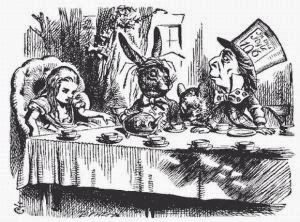
I don't think I have ever read Alice in Wonderland even though I, like the rest of western civilization, know the story by heart. I read the book on my Kobo and was very sad that the images were listed, but did not appear. I love the original artwork from this book and used several of the images to make jewellery when I was on a kick of making scrabble tile necklaces. Lewis Carroll does a good job of describing the life of a young child. His depiction of Alice prior to her tumble down the rabbit hole reminds me of every toddler I have ever known including myself. Kids are easily bored and have trouble sitting still. They also have vivid imaginations and Alice's "dream" is full of wonderful imagery and fantastical occurrences. I still remember when I started to fell weird about engaging in imaginary play. The transition from child to teen is so hard.

When I googled Alice in Wonderland to find an image to include in my blog the book covers and pictures didn't even appear as an option. The categories included Disney, Tim Burton and the various movie images, but not a single book cover. I find that sad. Don't get me wrong, the movies have made Alice in Wonderland available to the masses, but there is just something amazing about reading something in its original form. I do, however have a favourite adaptation of Alice and that is the Scy Fy Channel's made for TV Mini Series: Alice. The Mad Hatter, or Hatter, is fantastic in the show and the depiction of Wonderland as a casino where people feed on human emotions is both creepy and fantastic.
I can't wait to read Through the Looking Glass which is also on the 1001 Books to Read list. I am not sure I know much about that story and have been enjoying the books on the list that make up great story telling. I can see why Alice in Wonderland has been pasted down for generations and also why there are have been so many remakes of the books and movies. It is a tale that has definitely stood the test of time!
I don't think I have ever read Alice in Wonderland even though I, like the rest of western civilization, know the story by heart. I read the book on my Kobo and was very sad that the images were listed, but did not appear. I love the original artwork from this book and used several of the images to make jewellery when I was on a kick of making scrabble tile necklaces. Lewis Carroll does a good job of describing the life of a young child. His depiction of Alice prior to her tumble down the rabbit hole reminds me of every toddler I have ever known including myself. Kids are easily bored and have trouble sitting still. They also have vivid imaginations and Alice's "dream" is full of wonderful imagery and fantastical occurrences. I still remember when I started to fell weird about engaging in imaginary play. The transition from child to teen is so hard.

When I googled Alice in Wonderland to find an image to include in my blog the book covers and pictures didn't even appear as an option. The categories included Disney, Tim Burton and the various movie images, but not a single book cover. I find that sad. Don't get me wrong, the movies have made Alice in Wonderland available to the masses, but there is just something amazing about reading something in its original form. I do, however have a favourite adaptation of Alice and that is the Scy Fy Channel's made for TV Mini Series: Alice. The Mad Hatter, or Hatter, is fantastic in the show and the depiction of Wonderland as a casino where people feed on human emotions is both creepy and fantastic.
I can't wait to read Through the Looking Glass which is also on the 1001 Books to Read list. I am not sure I know much about that story and have been enjoying the books on the list that make up great story telling. I can see why Alice in Wonderland has been pasted down for generations and also why there are have been so many remakes of the books and movies. It is a tale that has definitely stood the test of time!
Subscribe to:
Posts (Atom)